Maximizing the Promise of GLP-1 Medications: What Our GLP-1 Whitepaper Reveals
Ideal Protein whitepaper shows why pairing GLP-1 medications with structured nutrition and coaching is key to preserving muscle, easing side effects, and keeping weight off long-term.


GLP-1 medications have changed the conversation around weight loss. For many people, they've delivered real, measurable results. But medication alone doesn't tell the whole story, and a growing body of research shows that what you do alongside a GLP-1 matters just as much as the prescription itself.
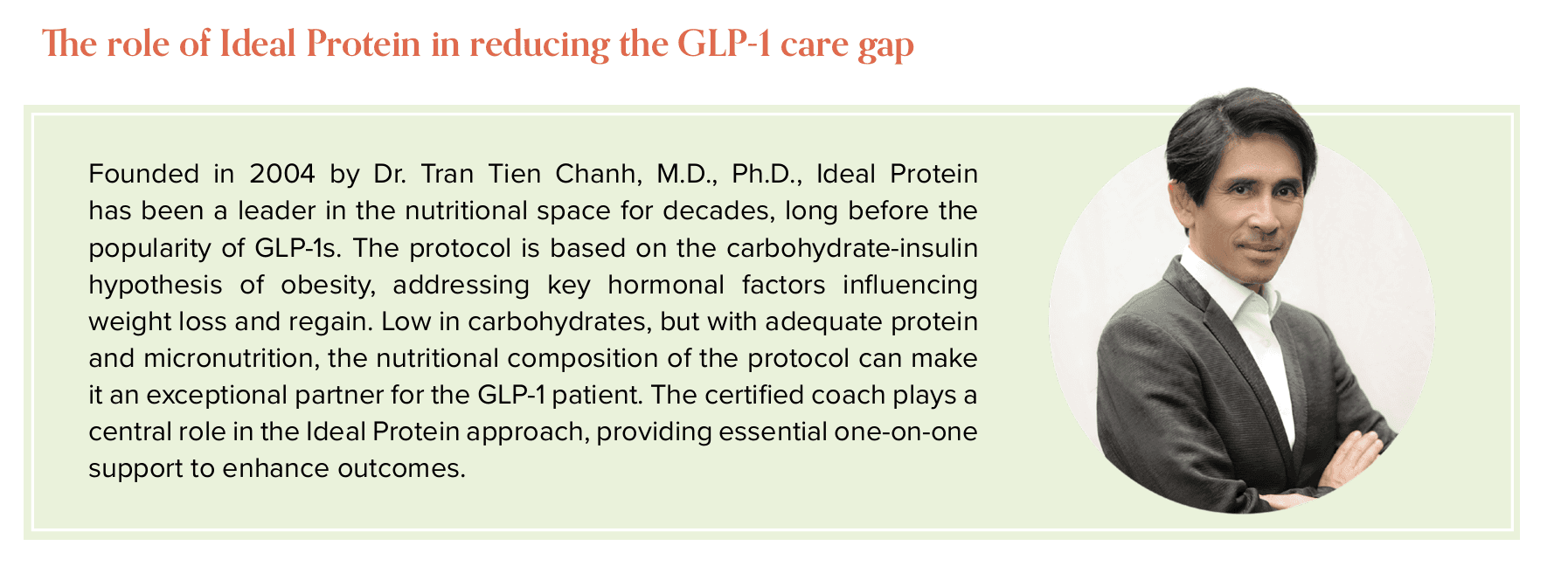
That's the focus of our whitepaper, Maximizing the Promise of GLP-1 Medications, which lays out the science behind pairing GLP-1 therapy with structured nutrition, coaching, and behavioral support. Here's a look at what it covers and why it matters for anyone on, or considering, a GLP-1 medication.
The Gap GLP-1s Don't Close on Their Own
GLP-1s are effective, but they come with limitations that are becoming harder to ignore:
Discontinuation is common. A meaningful share of patients stop taking their medication within the first month, often due to cost or side effects.
Muscle loss is a real risk. Research cited in the whitepaper indicates a substantial portion of the weight lost on GLP-1s can come from lean muscle rather than fat, and that muscle loss can continue the longer someone stays on the medication.
Weight regain after stopping is a documented pattern. Without lifestyle changes to fall back on, the results of the medication can be difficult to sustain.
These aren't reasons to avoid GLP-1s. They're reasons to pair them with something built to address exactly these gaps.
Where Ideal Protein Fits In
Our protocol was designed around the four pillars that drive lasting metabolic health: nutrition, coaching, physical activity, and behavior change. According to the whitepaper, that foundation is well-suited to complement GLP-1 therapy in a few specific ways:
Preserving lean muscle. Ideal Protein's high-protein approach is associated with participants retaining the most of their lean body mass during weight loss, directly countering the muscle-loss pattern seen with GLP-1 use alone.
Easing side effects. A fiber-forward, lower-carb structure may help ease some of the gastrointestinal discomfort commonly reported with GLP-1 medications, which can in turn support better adherence to treatment.
Supporting nutritional gaps. Reduced appetite often means reduced food intake overall; the whitepaper points to micronutrient supplementation as a way to help close nutritional gaps that can open up as a result.
Making results last. Coaching and structured nutrition give patients tools to maintain their progress well beyond the medication itself. This type of support matters most after a patient tapers off or discontinues GLP-1 therapy.
Click the link to download the complete whitepaper here: "Maximizing the Promise of GLP-1 Medications".